
The mismatch between formal education and the job market in Kenya creates a massive employment crisis among the youth. Many graduates struggle to find employment, while some even face challenges in retaining their jobs. addresses this challenge by providing students with a platform where they can develop their skills and talents, backing the theoretical knowledge taught in class.
CoELIB provides structured pathways that support the youth transitioning from lecture rooms to the workforce, helping to not only improve the workforce but also improve career potential. Based on the need for a “people-first” approach, the programme provides strategies to enhance individual potential in the workplace and advance their career trajectories. Workforce development not only enhances prospects in life but also leads to downstream benefits for businesses.
The year 2025 has seen CoELIB successfully run four cohorts, providing support and mentorship for media and communications students from various learning institutions in Kenya. The first cohort took place between March and June, with a capacity-building programme for 11 students. The last cohort began in September and continued through November.
“Through CoELIB Media, our workforce development programme runs four training cycles each year, enrolling new cohorts every quarter,” said Victor Otieno, the communications and media associate at CoELIB.
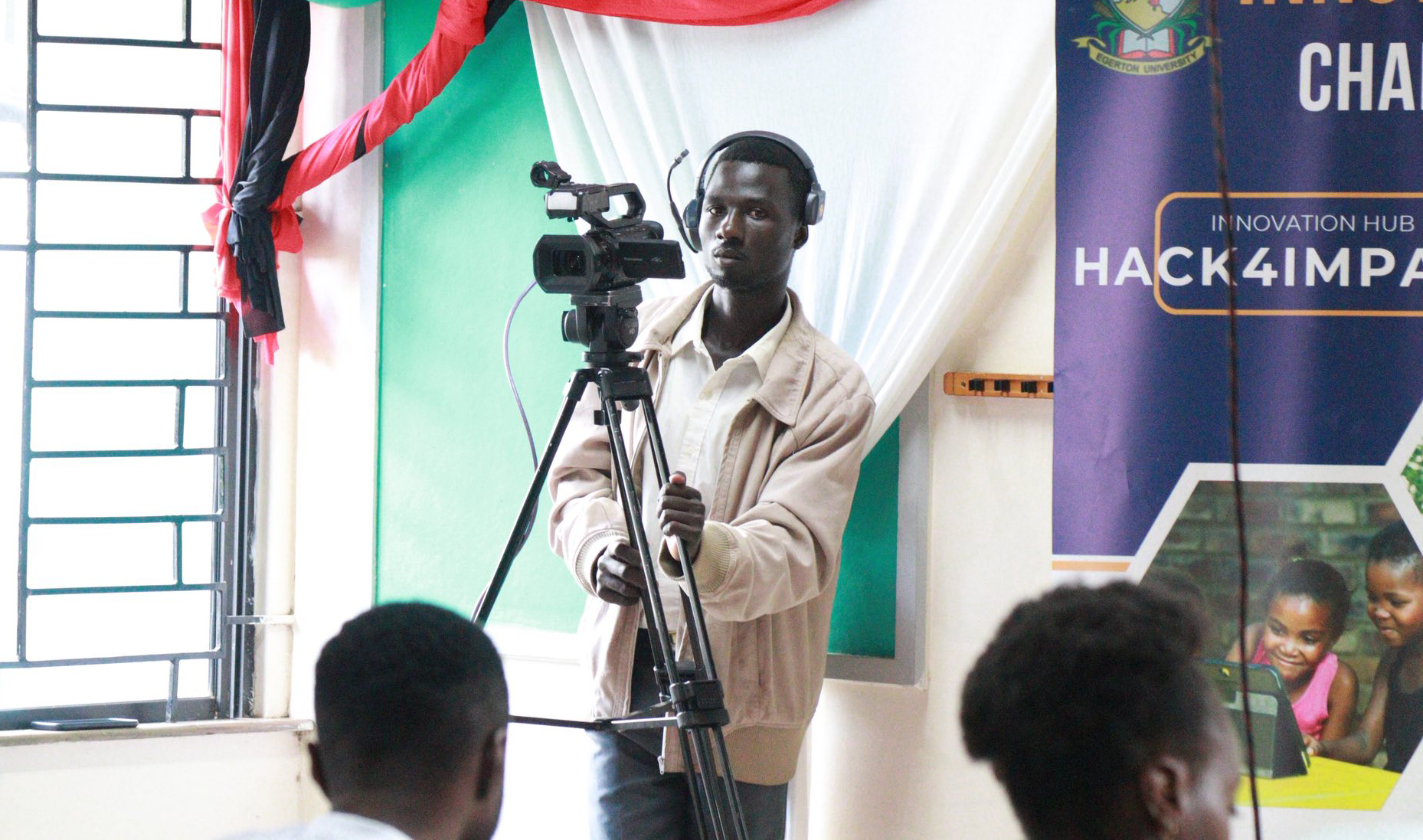
Each cohort undergoes hands-on training made to bridge the gap between academic learning and industry practice, encompassing a range of skills from real-world media production to effective communication.
“I gained tremendous knowledge and hands-on experience. Being part of the programme allowed me to apply what I’ve learnt in school in real-world media settings and develop practical skills that will shape my career for the better.” - Mercy Wairimu, student, Molo Technical and Vocational College
Among the high-end events the cohorts supported are the Kenya National Research Festival, hosted at Egerton University from August 18 to 22, and the Inaugural AI in Higher Education Summit, which took place from November 14 to 16, 2025. Being part of the team that produced these high-demanding live events exposed them to the real on-ground demands of media production.
“Working directly on these live events gave us first-hand insight into the high-pressure, fast-moving world of media production, pushing us to enhance both our technical expertise and creative problem-solving skills in a professional environment.” - Emmanuel Ekuwom, Student, Molo Technical and Vocational College
In addition, each attaché was tasked with producing project work of their own to boost their creativity and independence. They were also involved in the production of the Empowered Youth Program that airs on CoELIB TV every Friday.
“What made our time at CoELIB truly exceptional was having mentors who are young, relatable, and speak our language. Their approach made it so much easier to navigate the fast-paced demands of these media productions and pushed us to perform at our best,” said David Mugo, a history and international studies student at Egerton University.
CoELIB is leading the charge in addressing the disconnect between education and training systems, as governments and businesses continue to develop skill-mapping systems in line with the recommendations of the 2021 Generation Unlimited Report by the PwC Network in collaboration with UNICEF.
“We are committed to addressing the gap between education and training systems. We constantly work and evolve to stay at the forefront, developing practical solutions that equip young people with the skills they need to succeed in today’s workforce,” Wilson Karimi, Programs Administrator, CoELIB.