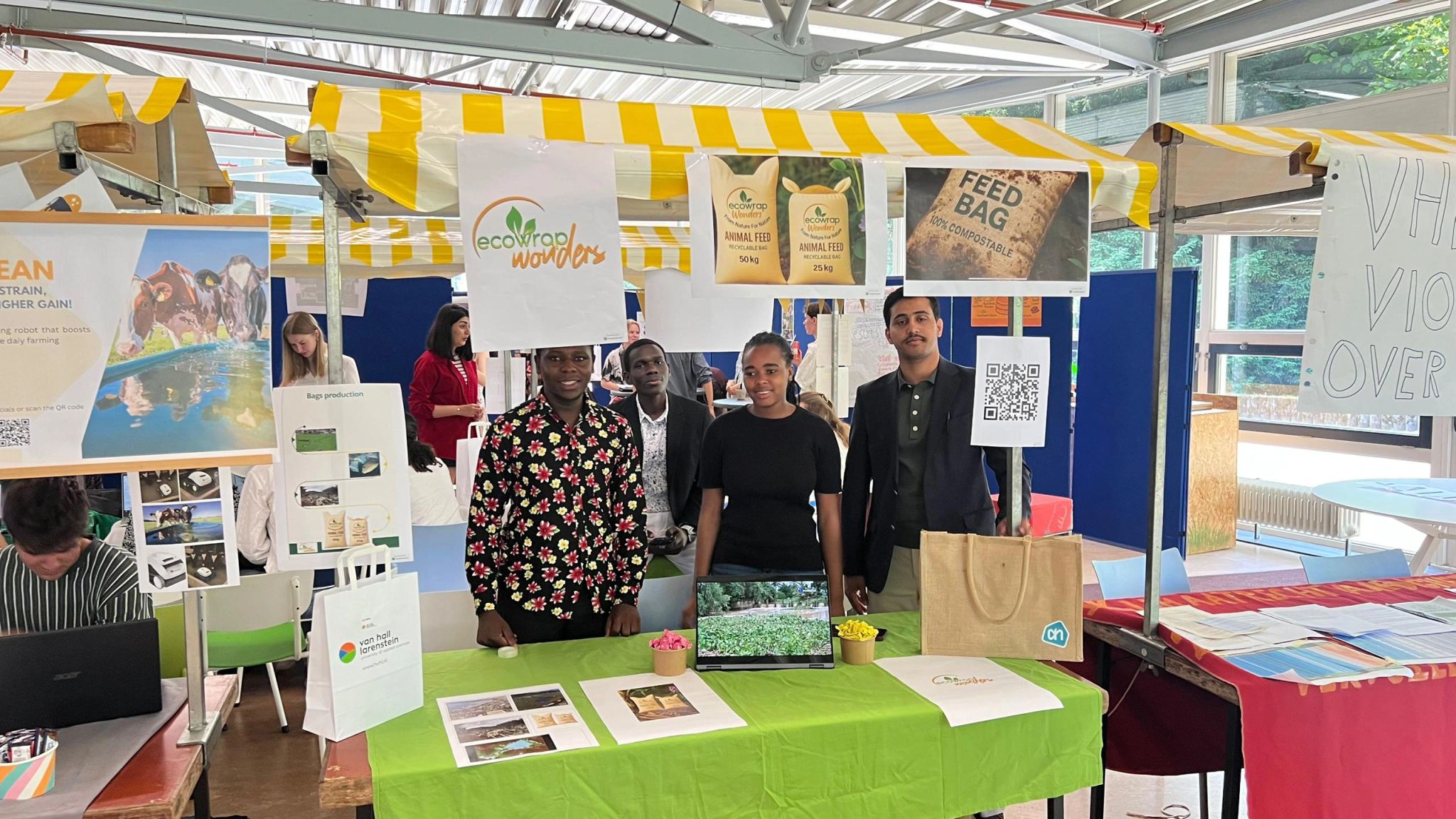
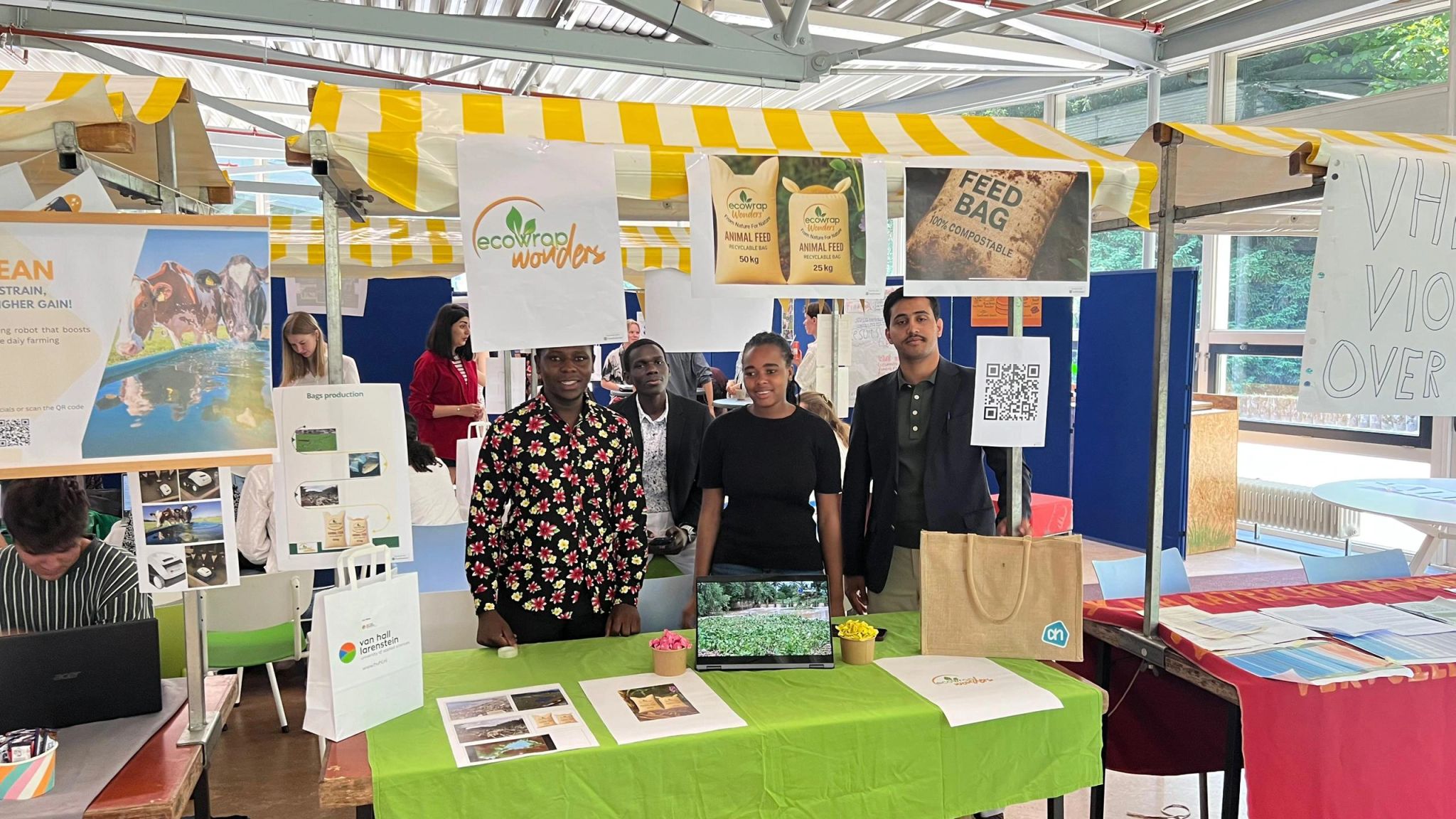
The youth play a crucial role in transforming food systems to create a sustainable agricultural future. For Peter Okoth, Evans Ochieng, and Teresia Wangari, their Erasmus+ mobility experience at Van Hall Larenstein (VHL) University of Applied Sciences exposed them to ideas on scaling climate-smart education, community involvement, and innovation. The exchange, facilitated through the Food Waste Reduction and Food Quality Living Lab (FORQLAB), inspired the students to explore new ways of rethinking the dairy value chain and transforming experiences into practice.
For Okoth, the programme was truly transformative. He gained transferable skills in innovation and problem-solving in animal husbandry while delving deep into learning about precision feeding, welfare monitoring and sustainable livestock systems. During the programme, practical sessions with farmers offered him valuable insights into modern dairy practices.
“Away from my studies, I embraced Dutch culture, forging collaborations and friendships that broadened my global outlook,” shares Peter.
The Erasmus+ mobility programme is part of the European Union’s Erasmus+ initiative, which supports education, training, youth, and wellbeing in Europe. The programme gives the youth opportunities to study or gain work experience abroad or transfer credits through the European Credit Transfer and Accumulation System (ECTS). This has greatly enhanced student skills, employability, and cultural awareness while strengthening inter-institutional collaboration.
Evans Ochieng, another Egerton University student, gained experience in innovation, farm risk management, and product quality for risk mitigation and business model development.
Occasional farm visits also exposed him to more professional practices and to the importance of circular agriculture. He shares a similar sentiment with Teresia Wangari about the exchange transforming their academic and professional path, renewing their purpose in agriculture and inspiring their readiness to contribute to Kenya’s agricultural transformation. For Teresia, the most essential part of the experience was the practical application of theoretical knowledge, a joint initiative that assessed the potential transition of a dairy goat farm from conventional to organic production.
The Food Waste Reduction and Food Quality Living Lab (FORQLAB) initiative was a consortium intervention led by four Dutch universities, Van Hall Larenstein, HAS, Inholland and Aeres, together with two Kenyan universities, Egerton University (CoELIB) and Meru University. Also involved are a range of business support organisations, knowledge partners and alumni networks from the dairy and avocado sectors.
FORQLAB followed a living lab approach: doing applied research with the business partners to find and test technical solutions and tools as well as look into better coordination in the avocado and dairy value chains.
Through such programmes, CoELIB continues to link global education with local solutions by empowering young leaders with the skills, networks, and confidence to innovate for a transformed Kenyan food system.